How to personalize B2G outbound
Generic outreach fails in government and education. Learn how to personalize B2G outbound with verified contacts and real buying signals that book meetings.

Personalizing B2G outbound is not a matter of dropping a district’s name or a mascot into a template. It means reaching a verified decision-maker with a reason grounded in something relevant happening at their account right now.
TL;DR: Personalizing B2G outbound
Personalized B2G outbound starts with a verified contact and a timely reason to reach out. Use board discussions, budgets, grants, and contract expirations to understand what an account may need.
Score accounts by buying readiness so reps focus their research. Then turn relevant signals into tailored messages inside the tools they already use.
AI can draft the outreach, while reps review the evidence and approve each message before sending it.
Start with verified contact data for government and education buyers
Accurate contact data is the prerequisite for personalization. Databases built on LinkedIn and other B2B sources barely reach government and education buyers, and the records they do hold go stale fast.
The reliable sources are the ones buyers maintain themselves. Official staff directories, district portals, university sites, and board minutes can help identify the person who currently holds the role. Trust those over a generic database record.
Starbridge is the AI GTM platform built on the most comprehensive dataset of public-sector buyers and buying signals. The platform helps companies selling to state and local government, K-12, and higher education identify, prioritize, and engage high-intent opportunities before the competition.

Starbridge’s Contacts & Company Data capability shows what purpose-built coverage looks like. The platform continuously crawls government and school sources, waterfall-enriches each record, and bounce-checks it so reps reach the current decision-maker.
The results back the approach. Starbridge records hit 98% email accuracy with a 2% bounce rate, versus the 15 to 25% common with generic databases.
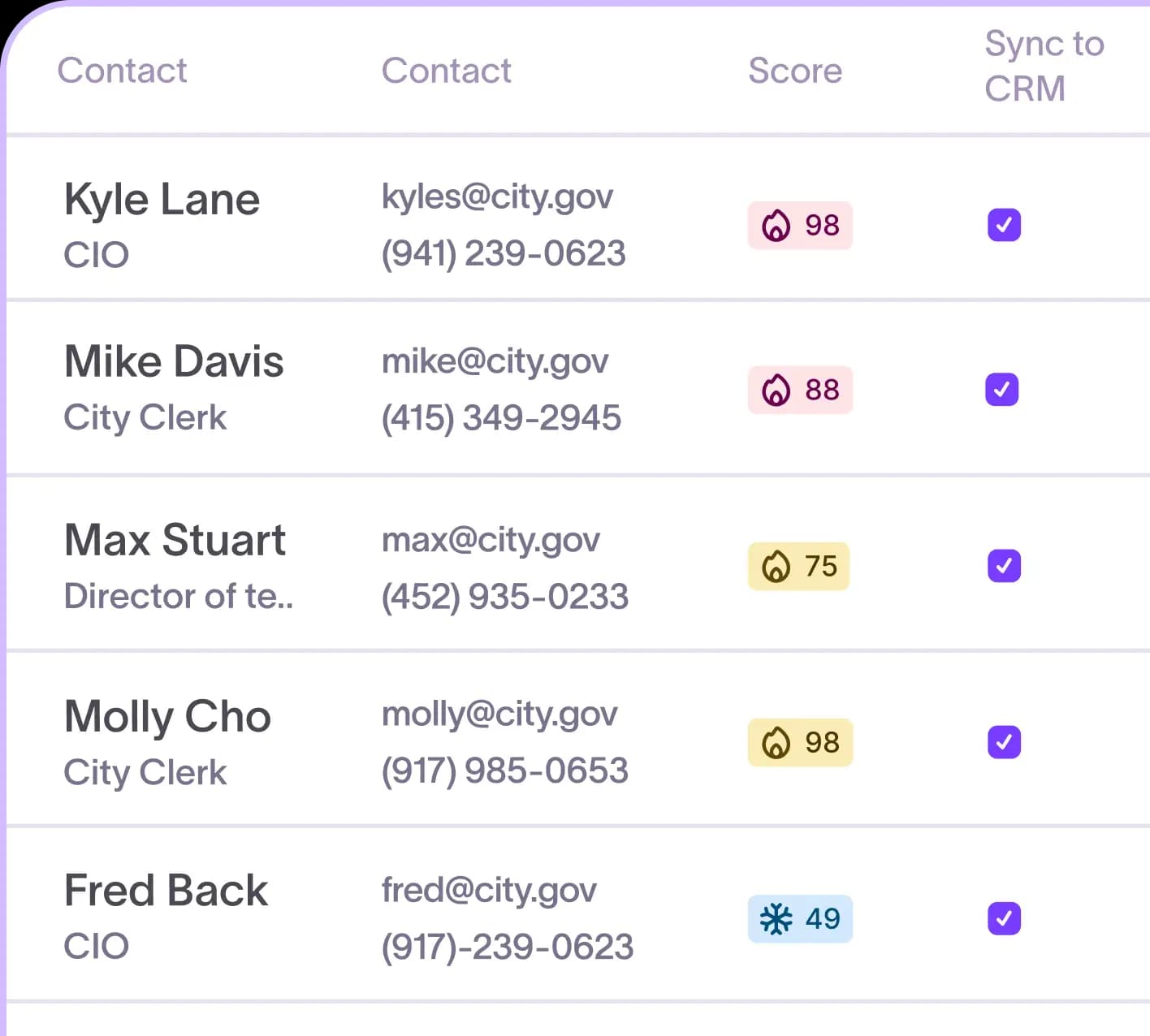
TAM to Target found Starbridge contact data 3 to 4 times more valid than the vendors it used before.
Personalize around buying signals
The most personal move in government and education sales is timing, not wording. Reach out with a relevant reason before an RFP, while evaluation criteria are still being written.
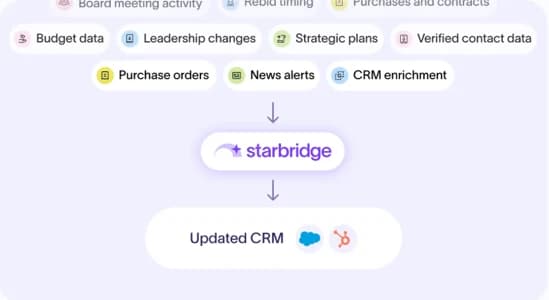
Buying signals are the public trail that precedes a deal. These indicators give reps a concrete reason to act, and the strongest ones tend to cluster in a few places:
- Board meeting discussions about a problem you solve
- Budget line items set aside for a category
- Grant awards that fund new spending
- Contract expirations that open the door to a replacement
- Leadership changes tied to purchasing authority
Each buying indicator can become the hook in a B2G outbound message.
For example, a board discussing student cybersecurity is an opening for an education-first note this week. A contract expiring in 12 months is a reason to start building the relationship now.
Starbridge’s Buying Signal Monitor surfaces these indicators before the RFP is published, tracking 320k+ government and education entities around the clock.
GovWell booked five meetings in its first week and now sources 15% of its qualified pipeline directly from Starbridge.
Score accounts to focus personalization where it pays off
Deep personalization in B2G outbound takes time, so it has to be applied where it yields the best results.
With thousands of districts, cities, counties, agencies, and universities in the TAM, reps who default to geography or company size inevitably waste effort on accounts that are not ready.
That’s why we recommend ranking each account on 5 to 7 attributes that reflect buying readiness rather than static firmographics (company size or location).
The table below shows account attributes worth scoring and what each one tells you:
| Attribute | What it tells you |
|---|---|
| Budget capacity | Potential ability to fund a purchase, once available funds are confirmed |
| Competitor usage | Who the incumbent is and where you can displace them |
| Contract expirations | When a rip-and-replace window opens |
| Grant awards | Potential category-specific funding, subject to award restrictions |
| Leadership changes | New buyers with authority and an agenda |
A buying-readiness list turns those scores into direction. It tells each rep which accounts deserve deep personalization now and which can wait.
Starbridge’s Dynamic Account Scoring applies this across 320k+ entities using 100+ buying indicators spanning spend, leadership, contracts, and grants.
InquirED generated $200,000 in new pipeline in its first quarter after replacing manual board-document research with signal-driven scoring.
Turn buying indicators into sent outreach inside your CRM
Sales intelligence stuck in a software dashboard still forces reps to figure out the next step on their own. The goal is to automatically route each indicator with a verified contact and a ready-to-send message into the tools reps already use.
Inside Starbridge, this is the job of a Bridge, a configurable workflow that ties a buying indicator to its verified contact, drafts outreach grounded in that context, and drops it into Salesforce, HubSpot, Apollo, or Outreach.
The AI-generated copy produces relevance at volume, while reps keep control over what they send.
Here’s how a morning runs when the workflow is connected:
- Sales reps open the digest of prioritized accounts.
- Reps review each buying indicator with its verified contact and reason to reach out.
- They approve or edit the AI-drafted message.
- They push it into Salesforce, HubSpot, Apollo, or Outreach.
This way, reps spend more time selling and less time researching. Frontline Education cut account research time by 90%.
Make timing and context your outbound advantage
Personalized B2G outbound wins when verified contacts and real buying context are present. Give reps the right person and a real reason to reach out, and the message is more likely to land.
Starbridge helps teams selling to state and local government, K-12, and higher education prioritize the right accounts, engage the right people earlier, and act on high-intent opportunities before the competition.
Book a demo to see what buying-indicator-driven outreach can do for your pipeline.
Frequently asked questions
Generic B2B personalization often relies on LinkedIn contact data and company activity. Government and education accounts run on fragmented public data, long procurement cycles, and a much smaller TAM where reputation matters. Personalization has to reach a verified decision-maker with a reason grounded in a real buying indicator, not just a first name.
The most reliable sources are official staff directories, district portals, university sites, and board minutes, because agencies actively maintain them. Generic databases drawn from LinkedIn can have coverage gaps and stale records. Starbridge crawls those sources with proprietary web-scraping technology and bounce-checks records to reach 98% email accuracy with a 2% bounce rate.
The strongest indicators are board meeting discussions, budget line items, grant awards, contract expirations, and leadership changes tied to purchasing authority. Each gives a concrete, timely reason to reach out. They can surface weeks or months before an RFP, while the buyer is still assessing needs. Engage through permitted channels and respect procurement and conflict-of-interest rules.
Score every account on 5 to 7 buying-readiness attributes such as budget capacity, competitor usage, contract expirations, grants, and leadership changes. That ranking replaces guesses based on geography or size. Starbridge Dynamic Account Scoring does this across 320k+ entities using 100+ buying indicators and updates automatically as new activity arrives.
Explore our use case library
 Automate account research with AI agentsStop manually researching accounts. Starbridge AI agents automate account research by monitoring buying signals 24/7 and surfacing the right contacts.
 Identify competitor contract expiration datesThe RFP is usually a formality. Starbridge surfaces competitor contract expiration dates so your reps reach accounts before the renewal cycle closes.
 Create a conference campaignTurn conference badge scans into pipeline. Import your contact list, surface buying signals across every account you met, and follow up with context.